Carpenter Ants
Camponotus species
NuisanceLarge black ants that excavate galleries in wood to nest, usually where wood has been damaged by moisture. They don't eat wood, but heavy infestations can weaken it. Finding the nest and the moisture source is the key.
What it is
Carpenter ants (genus Camponotus) are among the largest ants found in Mid-Atlantic homes. They get their name from their nesting habit: they excavate galleries in wood to make a nest. The University of Georgia's carpenter ant bulletin makes the key point clearly: carpenter ants do not eat wood the way termites do. They chew it out, push the shavings outside, and use the galleries as living space.
The most common species in the East is the black carpenter ant (Camponotus pennsylvanicus), though several other species occur. Colonies are social, with a queen, workers of different sizes (major and minor workers), and winged reproductives that leave to found new colonies.
Parent and satellite colonies
A mature colony nests in a parent colony, often outdoors in a dead or decaying tree, stump or log, where there is moisture. As it grows, it may establish satellite colonies in other locations, including drier wood inside homes. Satellite nests may contain workers and developing young but no queen, and they stay connected to the parent colony by foraging trails.
What they eat
Carpenter ants forage for sweets and proteins. They feed on honeydew (the sugary liquid produced by aphids and other insects), plant sap, other insects, and, indoors, sugary foods, pet food and grease.
Life cycle
Ants go through egg, larva, pupa and adult stages. Colonies grow slowly. It can take years before a colony is large enough to produce winged reproductives, so a colony that shows up in your house has often been developing for some time.
How to recognize it
Workers
- Size: workers range from about a quarter inch to over a half inch long, noticeably large compared with most household ants.
- Color: black in the common eastern species, sometimes with reddish or brownish parts depending on species.
- Shape: a smooth, evenly rounded upper surface of the thorax (the middle body section), with a single node (bump) on the narrow waist, and a circle of fine hairs at the tip of the abdomen.
- Workers within the same colony vary in size.
Winged reproductives (swarmers)
Winged ants emerging inside the home, especially in late winter or spring, suggest an indoor nest. They look like large flying ants and are often confused with termites (see the checks on the termite page: pinched waist, bent antennae and longer front wings).
Signs of an infestation
- Frass: piles of coarse sawdust-like shavings, often mixed with bits of insect parts, beneath small slits or holes in wood. The debris is a key sign of an active nest.
- Rustling or faint crinkling sounds inside walls or wood, particularly at night.
- Foraging trails of large black ants, especially at night.
- Smooth, sanded-looking galleries inside damaged wood, unlike the muddy, layered galleries of termites.
- A sudden appearance of large ants in the kitchen or bathroom.
Look-alikes
- Termites have a thick waist and straight antennae, and leave mud-packed galleries.
- Field ants and other large ants can look similar but nest in soil and don't damage wood.
- Acrobat and citronella ants are common household ants with different habits.
Where you will find it
Outdoors
Look for carpenter ants around trees with dead or decaying wood, stumps, firewood stacks, fence posts and landscape timbers. They often travel along tree branches, utility lines and shrubs touching the house.
Indoors
Indoor nests are strongly tied to moisture. Wood softened by leaks or condensation is the easiest to excavate. Typical areas include:
- Around bathrooms and kitchens with plumbing leaks
- Window and door frames, roof valleys and eaves with water damage
- Attics and crawl spaces with poor ventilation
- Wall voids and insulation near leaks, chimneys and porch roofs
- Hollow-core doors and wood in contact with soil
Ants may also nest in sound, dry wood, but this is less common and often involves a satellite nest connected to an outdoor parent colony.
Seasonality
Activity picks up in spring as temperatures rise and typically peaks in late spring and summer. Foraging is mostly at night. Swarmers appear in spring.
Why it matters
Structural damage
Carpenter ants do not eat wood, but their tunneling removes it. In small numbers over a short period, the damage is minor. Over years, a large colony or several satellite colonies can weaken framing, sills, porches and other wood. Damage tends to be worse where wood is already wet or rotting.
A sign of moisture problems
Finding carpenter ants often points to a hidden moisture problem, such as a roof leak or plumbing leak. Fixing the water problem is part of any long-term solution.
Nuisance
Large ants in the kitchen are an unwelcome sight. They are not generally considered a significant health threat, but they can bite if handled, and their trails can contaminate food.
What to do
Check and reduce moisture
- Look for and fix roof, gutter, plumbing and window leaks.
- Keep attics, crawl spaces and basements dry and well-ventilated.
- Replace water-damaged or rotting wood, once a professional has confirmed the ants are addressed.
Remove bridges and attractants
- Trim tree branches and shrubs so they don't touch the house, roof or utility lines.
- Keep firewood, lumber and debris away from the foundation, and store firewood off the ground.
- Remove old stumps and dead trees near the home when possible.
- Wipe up sweet spills and crumbs, seal food and pet food, and empty trash regularly. Rinse recycling containers.
Observe
Follow the trail. If you see ants carrying food along a line, note where they go. Photograph any sawdust-like debris and where it falls. This information helps a professional find the nest, which is the key to any real solution.
What not to do
- Don't spray the ants you see. The visible ants are a small part of the colony. Spraying only kills those workers and may cause the colony to split into more nests.
- Don't drill or open walls to look for the nest yourself. You can damage the structure and scatter the ants, and the nest is often in a different place than you expect.
- Don't rely on bait or dust products from the store without an identified nest. The species and nest location matter.
When to call a professional
Finding the nest is a skill. Many control failures come from treating the visible ants and missing the colony, including satellite nests and the parent colony outside.
Call a pest professional if
- You see large black ants regularly indoors, particularly at night or in spring.
- You find frass (wood shavings) or hear rustling in walls.
- You see winged ants indoors.
- You have a known moisture problem along with ants.
A professional will identify the ant species, search for the parent and satellite nests, check for moisture and entry points, and recommend a treatment plan, which may include exterior work and follow-up visits. Ask about contributing conditions as well, such as tree contact and moisture, so the fix lasts.
Consider other experts
If you find structural damage, a contractor or building inspector can assess repairs. If the cause is a leak, a plumber or roofer may need to be involved.
Sources
Questions
Do carpenter ants eat wood?
No. They excavate wood to build galleries and push out the shavings, but they feed on sweets, proteins and insects.
How can I tell carpenter ants from termites?
Ants have a pinched waist, bent antennae and forewings longer than hindwings. Termites have a thick waist, straight antennae and equal-length wings. Ant galleries are smooth and clean, while termite galleries contain mud.
Why do I see big black ants in my kitchen at night?
Carpenter ants forage mostly at night. Seeing them inside can mean a nest is nearby, in the structure or just outside.
Does a carpenter ant problem mean I have a moisture problem?
Often. Indoor nests are commonly found in wood that has been softened by leaks or condensation.
Related reading
Related pests
Termites
Social, wood-eating insects that nest in the soil and tunnel into structures, often unseen for years. In the Mid-Atlantic the eastern subterranean termite is the main concern. Inspection and professional treatment...
Read more →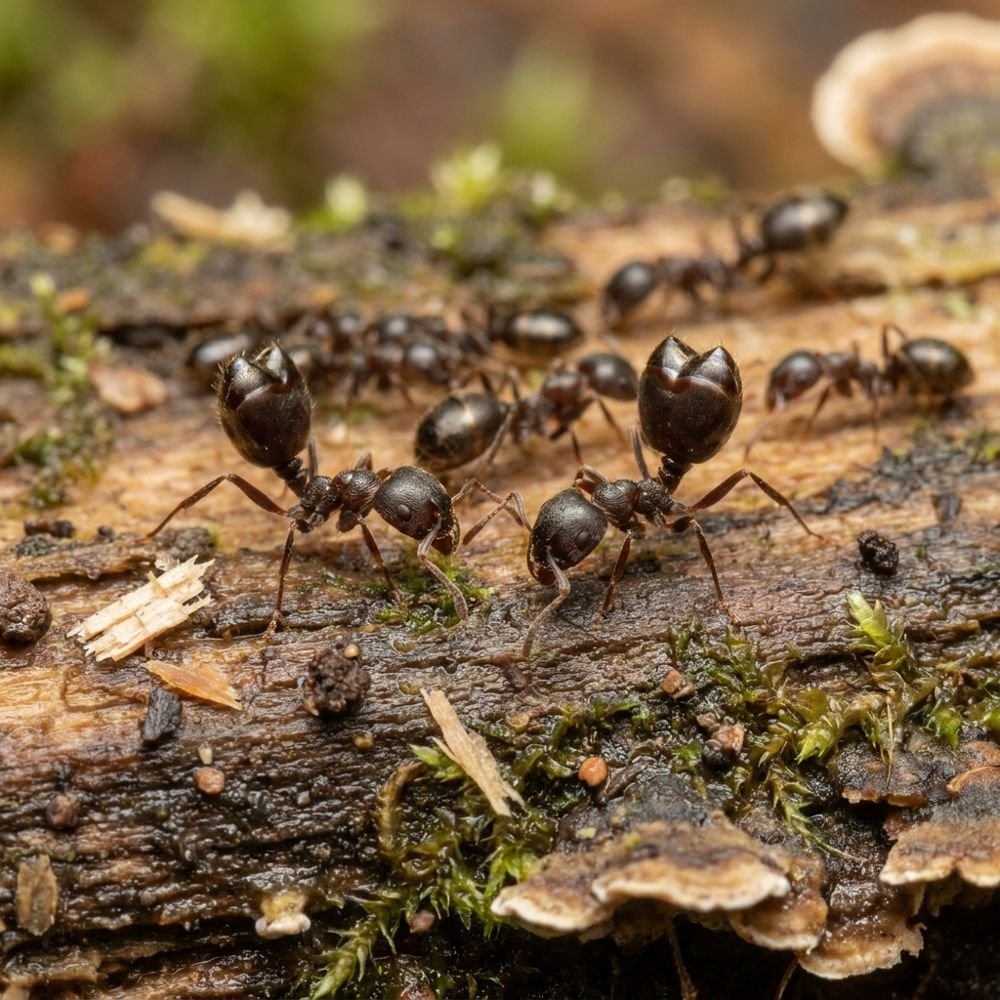
Acrobat Ants
Small ants named for their habit of raising the abdomen over the thorax when disturbed. They often nest in damp or decaying wood, wall voids, insulation, and around moisture-damaged areas.
Read more →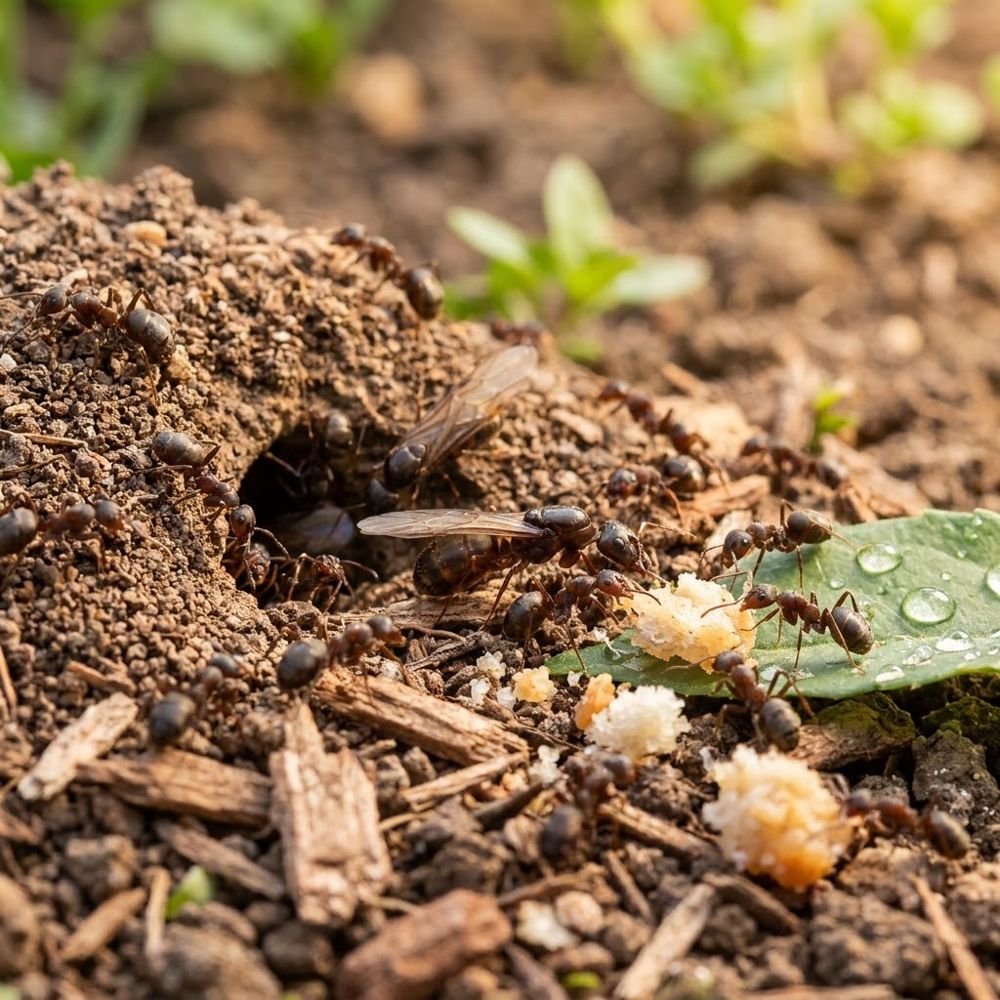
Ants
Social insects that live in colonies with workers, queens, and often winged reproductive forms. Pest species may nest indoors or outdoors and are commonly attracted to food, moisture, or suitable nesting sites.
Read more →Citronella Ants
Yellow to yellow-brown ants that give off a lemon/citronella odor when crushed. They usually nest in soil and feed on honeydew from root-feeding insects, but winged forms may appear indoors during swarms.
Read more →This page is general information, not a diagnosis. Pests vary by region and situation, and an on-site inspection is the reliable way to know what you have.