Fire Ants
Solenopsis invicta
DangerousWhat it is
Aggressive mound-building ants known for painful stings. Colonies are usually outdoors in soil and can quickly defend nests when disturbed, posing a risk to people, pets, and livestock.
How to recognize it
- Reddish-brown workers, 1/8 to 1/4 inch, in a range of sizes within one colony
- Dome-shaped mounds of loose soil with no visible central opening, often in sunny lawns
- Swarm out quickly when a mound is disturbed
- Stings burn, and small white pustules form within a day or so
Where you will find it
Sunny lawns, parks, pastures, and along sidewalks and foundations. They can also nest in or around electrical equipment and air conditioners.
Established across much of the southern US, from Texas east to the Carolinas, with smaller infestations farther north and west.
Why it matters
Their stings are painful and can cause serious reactions in some people.
Look-alikes
- Native mound-building ants: Mounds often have a visible opening, and the ants are usually less aggressive.
- Field ants: Larger, less aggressive, and don't swarm out in large numbers.
What to do
- Avoid disturbing mounds. Fire ants swarm and sting quickly.
- Keep children and pets away from mounds.
- Call a professional to treat the yard. Treating neighboring properties together works best.
- Check outdoor electrical equipment and air conditioners for activity.
When to call a professional
- There are several mounds in your yard.
- Children or pets have been stung.
- The nest is inside a wall or utility box.
Questions
How bad is a fire ant sting?
Painful and burning, followed by itchy pustules. Most people recover in days, but a severe allergic reaction needs emergency care.
Does gasoline or boiling water work on mounds?
No. Gasoline is dangerous and harms soil, and boiling water rarely kills the whole colony.
Why do mounds pop up after rain?
Rain floods the tunnels, so colonies rebuild higher up, which makes the mounds more visible.
Related pests
Carpenter Ants
Large black ants that excavate galleries in wood to nest, usually where wood has been damaged by moisture. They don't eat wood, but heavy infestations can weaken it. Finding the nest and the moisture source is the key.
Read more →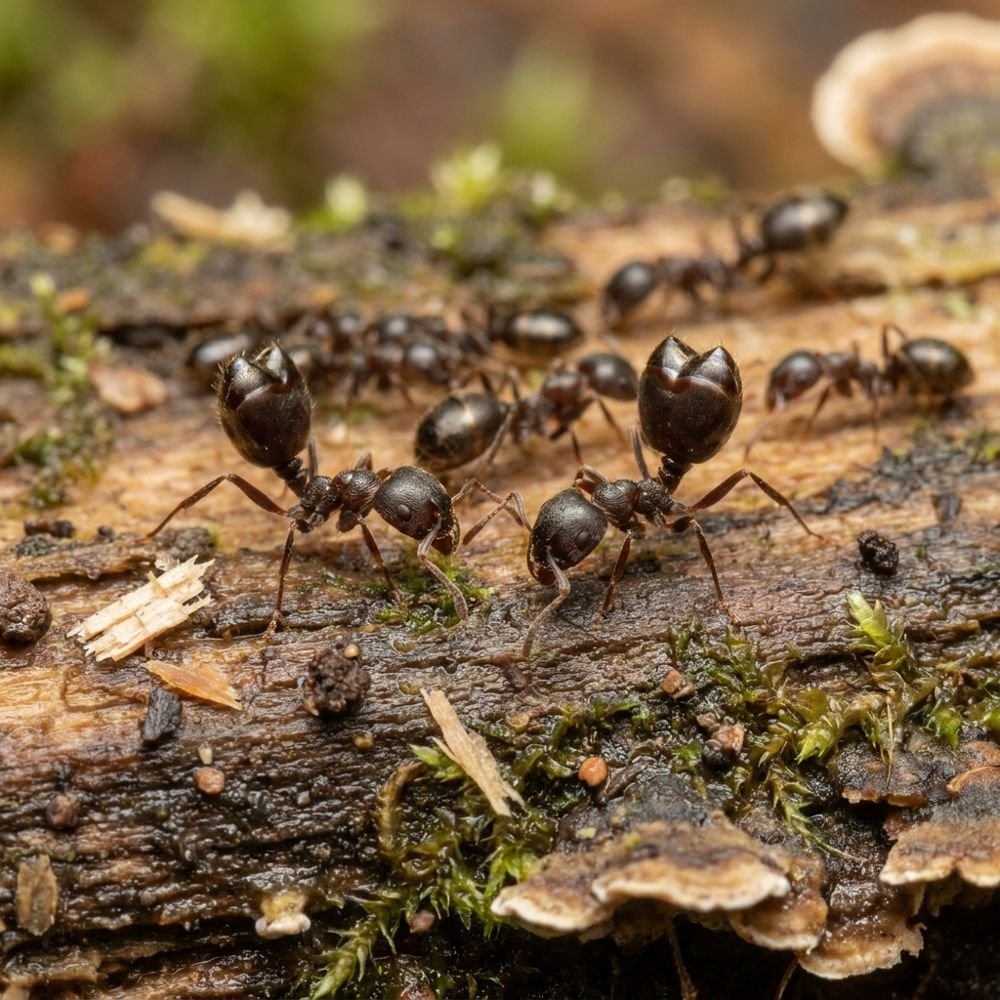
Acrobat Ants
Small ants named for their habit of raising the abdomen over the thorax when disturbed. They often nest in damp or decaying wood, wall voids, insulation, and around moisture-damaged areas.
Read more →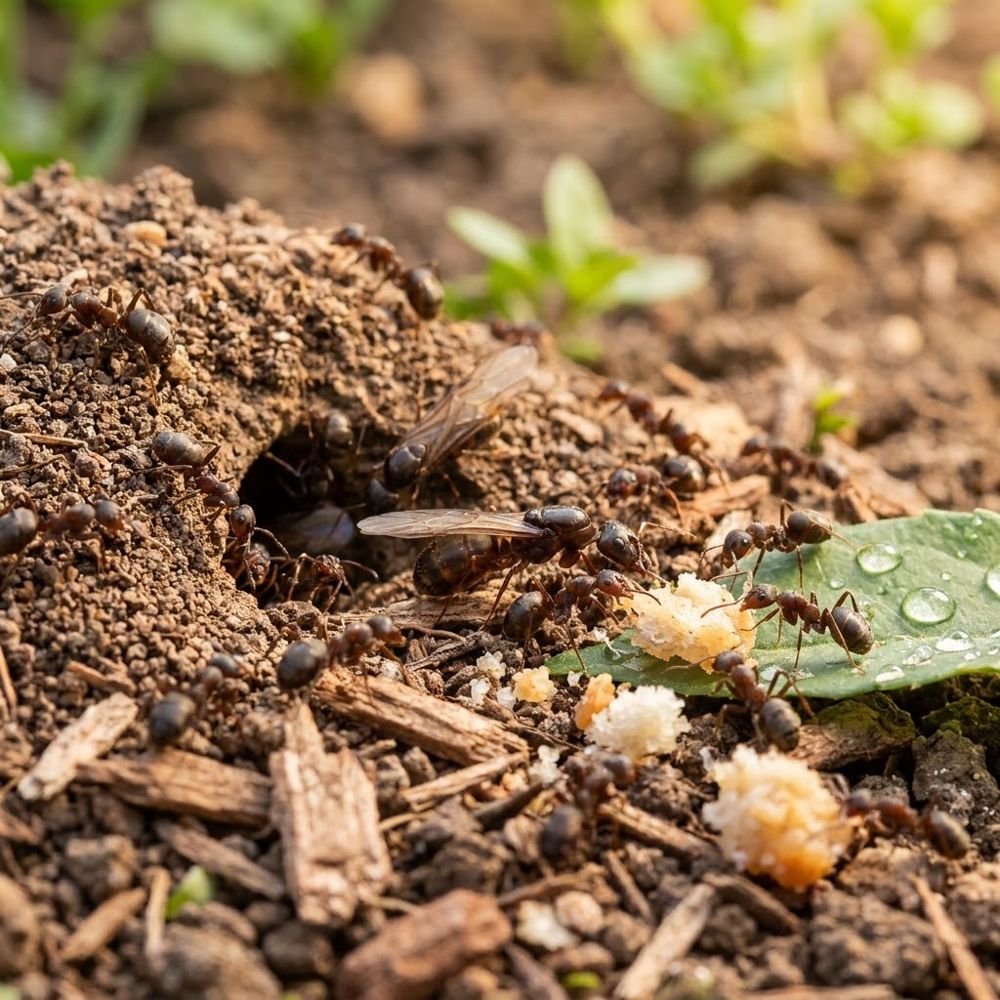
Ants
Social insects that live in colonies with workers, queens, and often winged reproductive forms. Pest species may nest indoors or outdoors and are commonly attracted to food, moisture, or suitable nesting sites.
Read more →Citronella Ants
Yellow to yellow-brown ants that give off a lemon/citronella odor when crushed. They usually nest in soil and feed on honeydew from root-feeding insects, but winged forms may appear indoors during swarms.
Read more →This page is general information, not a diagnosis. Pests vary by region and situation, and an on-site inspection is the reliable way to know what you have.