German Roaches
Blattella germanica
NuisanceSmall tan cockroaches with two dark stripes behind the head. They breed quickly in warm kitchens and bathrooms, can aggravate allergies and asthma, and are hard to clear without professional help.
What it is
The German cockroach (Blattella germanica) is the most common cockroach pest found indoors and the one pest professionals deal with most often in kitchens and bathrooms. NC State Extension describes it as a small, light brown cockroach that lives almost entirely inside buildings and reproduces faster than any other common household roach.
Despite the name, it is found worldwide and has no connection to Germany that matters to a homeowner. It can't survive well outdoors in cold climates, so it lives where people live: apartments, restaurants, food-handling facilities, hotels, dorms and houses.
Life cycle and why they multiply so fast
German cockroaches go through three stages: egg, nymph and adult. A female carries her egg case (ootheca) attached to the tip of her abdomen until just before the eggs hatch, which protects the eggs and speeds up development. Each case holds a few dozen eggs. Nymphs molt several times before becoming adults, and in warm kitchens the cycle from egg to breeding adult can take only a couple of months. One missed female can restart a population quickly.
Habits
German cockroaches are nocturnal, spend most of the day hiding and avoid light. They prefer warm, humid, tight spaces close to food and water. They are omnivores that eat crumbs, grease, pet food, toothpaste, soap and even glue. Seeing them out in the open during the day usually means the population is large and the hiding places are crowded.
How to recognize it
Adults
- Size: about a half inch (roughly 13 to 16 millimeters) long.
- Color: light tan to brown.
- The key marking: two dark, parallel stripes running from behind the head down the shield (pronotum). No other common household cockroach has this pattern.
- Wings: adults have wings but rarely fly.
Nymphs
Nymphs are smaller, dark brown to nearly black and wingless, with a pale stripe down the middle of the back. People often mistake them for a different, darker insect.
Egg cases
A light brown, bean-shaped capsule about a quarter inch long, often seen sticking out of a female's abdomen.
Signs of an infestation
- Seeing roaches in the daytime, or when you turn on a light at night.
- Small dark specks like ground pepper or coffee grounds, which are droppings, in corners, drawers and along cabinet hinges.
- Smears on surfaces in heavy infestations.
- Shed skins and empty egg cases.
- A musty, oily odor in a heavy infestation.
Look-alikes
- Brown-banded cockroaches are similar in size but have two pale bands across the wings and live higher up, in cabinets and behind pictures.
- Smokybrown, American and Oriental cockroaches are larger and darker.
- Wood cockroaches live outdoors and sometimes wander in.
- Beetles and crickets are sometimes mistaken for nymphs.
Because the control approach depends on the species, an accurate identification matters. The identifier on the home page, a clear photo, or a sample in a sealed container can help.
Where you will find it
Hot spots
German cockroaches concentrate near food, water and heat:
- Kitchens: under and behind the refrigerator, stove and dishwasher, inside cabinets and drawers, around sinks, and in the hinges and corners of cabinet doors.
- Bathrooms: around plumbing, vanities and behind toilets.
- Small appliances such as microwaves, toasters and coffee makers, and electronics that give off warmth.
- Pantries and anywhere food is stored.
How they get in
They usually arrive by hitchhiking, in grocery bags, cardboard boxes, secondhand appliances, luggage, or by moving through shared walls and plumbing in apartment buildings. A single egg case in a delivery box can start an infestation.
Seasonality
Because they live indoors, they are active year-round. There is no off-season.
Why it matters
Health effects
Cockroaches are tied to health problems in several ways. Their droppings, shed skins and body parts contain allergens that can trigger allergies and asthma, particularly in children. NC State notes that German cockroaches are also associated with spreading microorganisms picked up from unsanitary places onto food and food-preparation surfaces. They can contaminate food, dishes and countertops as they move around.
Living conditions
A heavy infestation is stressful and can affect sleep, food storage and peace of mind. In rental housing and food businesses, cockroaches can cause complaints, failed inspections and lost business.
Why they are hard to control
A fast breeding rate, tiny hiding places, and the ability to develop resistance to some insecticides make German cockroaches difficult for a homeowner to eliminate. Over-the-counter sprays often cause the insects to scatter into new areas, which spreads the problem, especially in multi-unit buildings.
What to do
Sanitation is the foundation of cockroach management, even though it cannot solve an established infestation on its own.
Remove food and water
- Clean up daily. Wipe counters, stovetops and tables; sweep or vacuum crumbs; wash dishes the same day.
- Clean the grease. Grease on the stove, hood and behind appliances is a major food source.
- Store food in tightly sealed containers, including pet food. Don't leave pet bowls out overnight.
- Empty trash daily and use a lidded container. Take recycling out regularly and rinse containers.
- Fix leaks and wipe sinks dry at night. Moisture is as important to them as food.
Reduce hiding places
- Remove cardboard boxes, paper bags and newspapers, which provide shelter and food.
- Reduce clutter in kitchens and storage areas so you can see and clean.
- Be careful what you bring in. Inspect secondhand appliances and electronics, and unpack grocery bags and delivery boxes promptly. Break down and recycle cardboard outside.
Monitor
Sticky traps placed along walls and under sinks are an inexpensive way to see where the roaches are and whether the population is shrinking. Use them to gather information for your provider, not as a stand-alone cure.
What not to do
- Don't use bug bombs or foggers. They scatter roaches into walls and neighboring units and can leave residues on food-prep surfaces.
- Don't spray repeatedly with store-bought products. Roaches avoid treated areas and the problem moves.
- Don't treat food-prep areas yourself. Product choice and placement matter, particularly around children and pets.
When to call a professional
A German cockroach infestation is hard to clear without professional help, especially if it has been present for a while or you share walls with neighbors.
Call a pest professional if
- You see roaches in the daytime or in multiple rooms.
- You see nymphs or egg cases, which indicate an active breeding population.
- You have tried store-bought products and are still seeing roaches.
- You live in an apartment or attached home. Coordinated treatment of neighboring units is often needed.
- You run a food business and need documentation for inspections.
A professional will identify the species, find the harborage areas you can't see, and design a plan with follow-up visits. Preparation matters, so ask what you should do to help, such as emptying cabinets and cleaning grease.
Also consider
If someone in the household has asthma or allergies and symptoms worsen with a roach problem, mention it to your doctor and your pest provider.
Sources
Questions
Does having German cockroaches mean my home is dirty?
Not necessarily. They hitchhike in boxes, bags and appliances and can spread through shared walls. Good sanitation helps, but a clean home can still have them.
Why am I seeing roaches during the day?
Roaches are nocturnal. Daytime sightings usually mean the hiding places are crowded, which suggests a larger population.
Do roach bombs work?
They usually make things worse by scattering roaches into other areas. A professional plan works better.
Can cockroaches affect asthma?
Cockroach droppings, shed skins and body parts contain allergens that can trigger allergies and asthma, especially in children.
Related reading
Related pests
American Roaches
Large reddish-brown cockroaches that favor warm, damp areas such as sewers, basements, boiler rooms, commercial kitchens, and utility spaces. They can travel long distances through drains and service lines.
Read more →Brown-Banded Roaches
Small cockroaches with pale bands across the wings or abdomen. They prefer warmer, drier areas than German cockroaches and may infest upper cabinets, furniture, electronics, bedrooms, and offices.
Read more →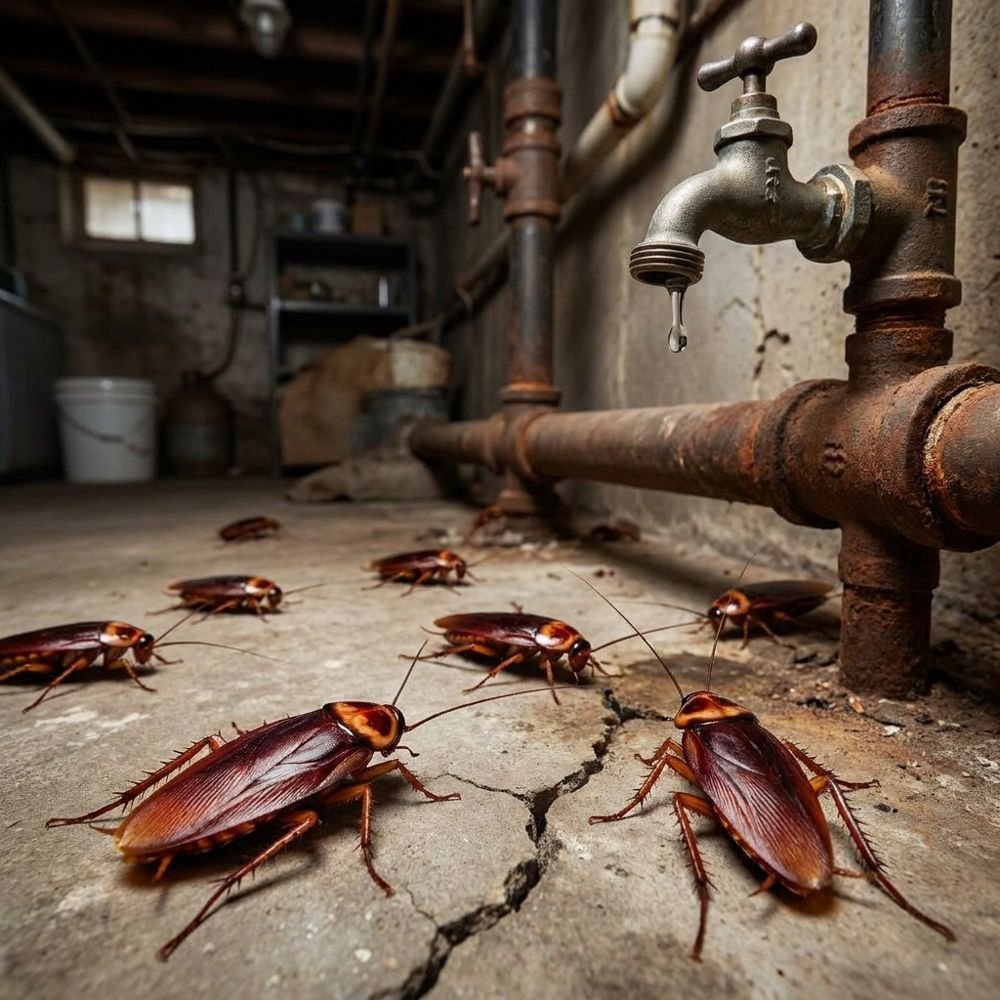
Cockroaches
Flattened, fast-moving insects that hide in cracks and dark harborages and usually forage at night. Different species favor different moisture and temperature conditions, and infestations can contaminate food and...
Read more →Oriental Roaches
Dark brown to black cockroaches that prefer cool, damp environments such as basements, crawlspaces, floor drains, sewers, and utility areas. They are less agile on smooth surfaces than some other cockroach species.
Read more →This page is general information, not a diagnosis. Pests vary by region and situation, and an on-site inspection is the reliable way to know what you have.