Black Garden Ants
Nuisance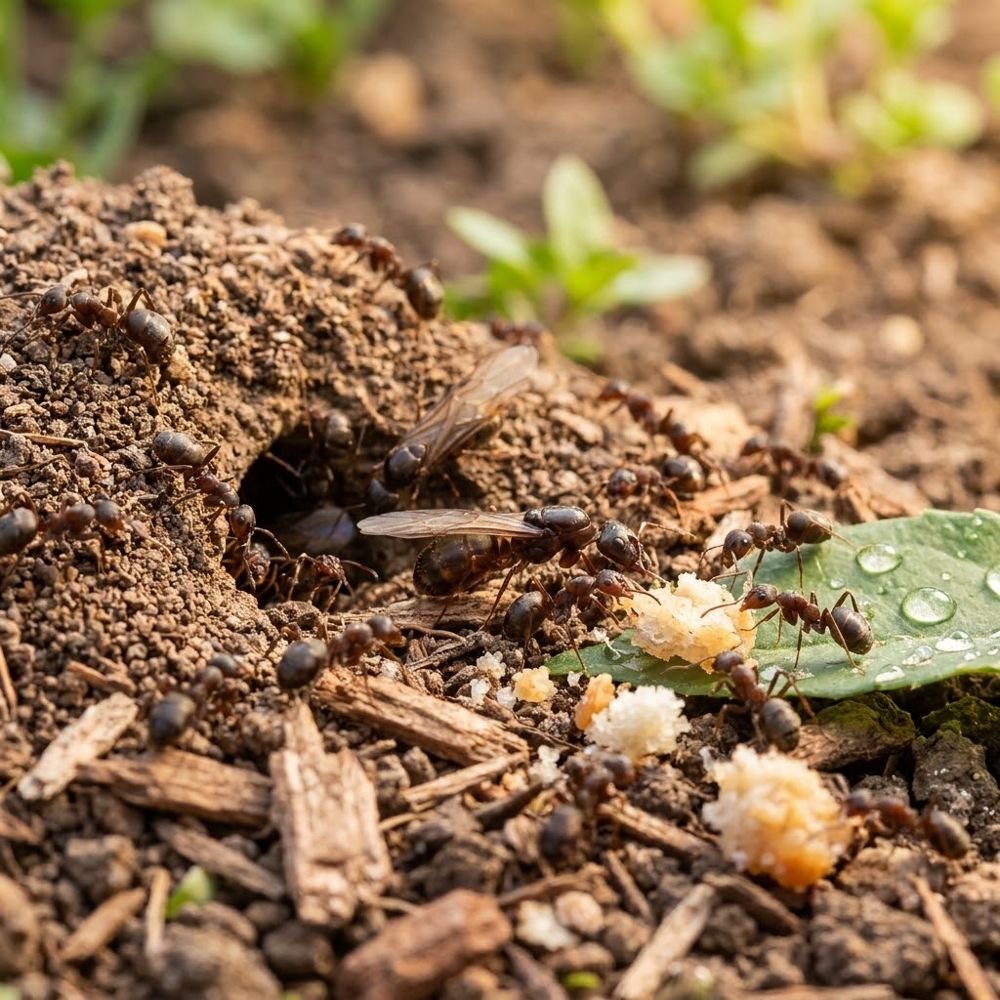
Image: AI-generated illustration
A small, shiny black ant that nests in soil and trails into kitchens for sweets and crumbs. A nuisance, not a structural pest.
What it is
The black garden ant (Lasius niger) is one of the most common and widespread ants in Europe, and it is also found in parts of North America, Asia and Australia. Colonies are large and well organized and can reach about 15,000 workers. These ants are a common sight in gardens and yards, and they often come indoors looking for food, which makes them a nuisance pest, especially in kitchens. They are largely harmless and do not spread disease, but their trails and their presence around food are unpleasant.
How to recognize it
- Size and color: workers are small, about 3 to 5 mm (roughly 1/8 inch) long, black to dark brown, with a smooth, shiny body. Queens are much larger, up to about 15 mm, and mid-brown, but are rarely seen unless a nest is dug up.
- Shape: a narrow, "pinched" waist with a single small segment, and bent (elbowed) antennae.
- Behavior: workers follow well-defined scent trails, often seen as lines of ants moving between the nest and a food source. They do not have a stinger.
Where you will find it
- Outdoors: they nest mainly in dry soil and humus, often in flower beds, lawns, under paving stones, at the base of walls and under flat stones. They feed on small live and dead insects, nectar, seeds and the sugary honeydew made by aphids, which they often "tend" and protect.
- Indoors: they come into houses, especially in warmer months, looking for sweets, sugar, crumbs and protein foods such as scraps of meat. They usually get in through small cracks around doors, windows and foundations.
Why it matters
- Nuisance: they are common in kitchens and bathrooms, where they contaminate food and surfaces as they forage.
- Garden impact: nests around plant roots can dry the soil out, and the ants may farm aphids (which are plant pests) for honeydew.
- Not a structural threat: unlike carpenter ants, black garden ants do not tunnel through wood or damage buildings.
What to do
- Keep food sealed: store food, including pet food, in sealed containers.
- Clean up: wipe up crumbs, grease and sticky spills, and keep food-prep areas clean.
- Keep trash covered and take it out regularly.
- Watch the trail: note where the ants are walking and where they enter, and take a photo so a technician can trace it to the nest.
- Contact a professional before trying a home remedy.
What not to do
- Do not spray the trail and call it done. Contact sprays rarely solve the problem because the nest stays active.
- Do not use store-bought sprays or baits on your own. Sprays can scatter ants or make them avoid bait, and in some species can cause the colony to split into several new nests (budding), which can make the problem worse.
- Do not use broad outdoor sprays. They can harm beneficial insects and other wildlife.
When to call a professional
- You cannot find where the ants are coming from after following the trails.
- Ants keep showing up inside, especially in large numbers.
- The problem keeps coming back.
- You are not sure of the species. A professional can confirm whether you have black garden ants or a wood-destroying species such as carpenter ants.
What a professional will do
A licensed pest technician will identify the ant, trace the trails to find the nest, and carry out a targeted treatment plan. This may include professional-grade baits that foraging ants carry back to the colony to reach the queen and brood, non-repellent treatments on the exterior foundation and entry points that ants unknowingly carry back to the nest, and treating nests directly in soil, walls or under paving. They can also advise on sanitation and structural changes that help prevent a repeat.
Questions
Do black garden ants bite or sting?
They have no stinger. They are a nuisance rather than a danger.
Do they damage wood?
No. Unlike carpenter ants, they do not tunnel through wood.
Why do they keep coming back to the kitchen?
Workers follow scent trails to sweet and protein foods, so crumbs and spills keep the trail active.
Related reading
Related pests
Acrobat Ants
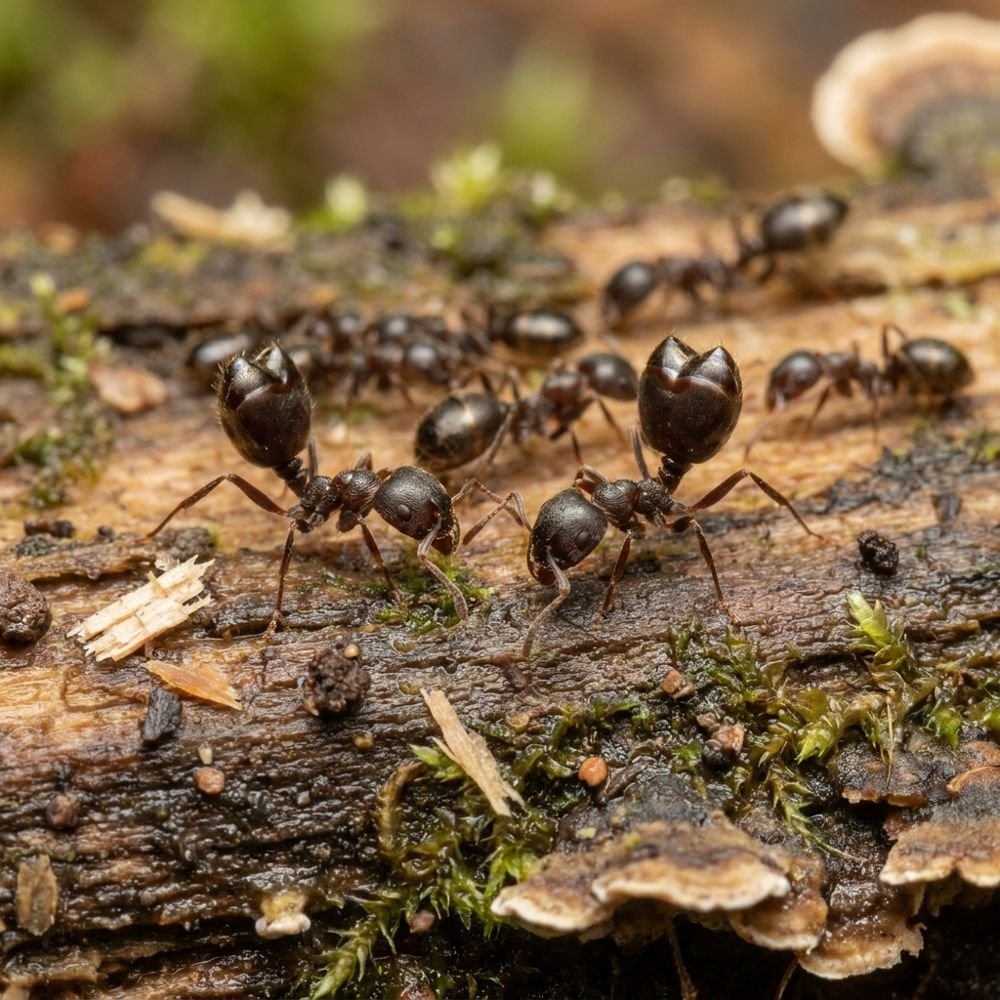
Ants that raise a heart-shaped abdomen. They nest in damp or damaged wood and wall voids, so find the nest and the moisture.
Read more →Carpenter Ants
Large black ants that excavate galleries in wood to nest, usually where wood has been damaged by moisture. They don't eat wood, but heavy infestations can weaken it. Finding the nest and the moisture source is the key.
Read more →Citronella Ants
Yellow ants that smell of lemon when crushed. They are a nuisance, but swarmers are easily mistaken for termites, so get them identified.
Read more →Field Ants
Native outdoor ants that build soil mounds in lawns and pastures. They rarely enter homes but can harm trees near large mounds.
Read more →This page is general information, not a diagnosis. Pests vary by region and situation, and an on-site inspection is the reliable way to know what you have.