American Dog Tick
Dangerous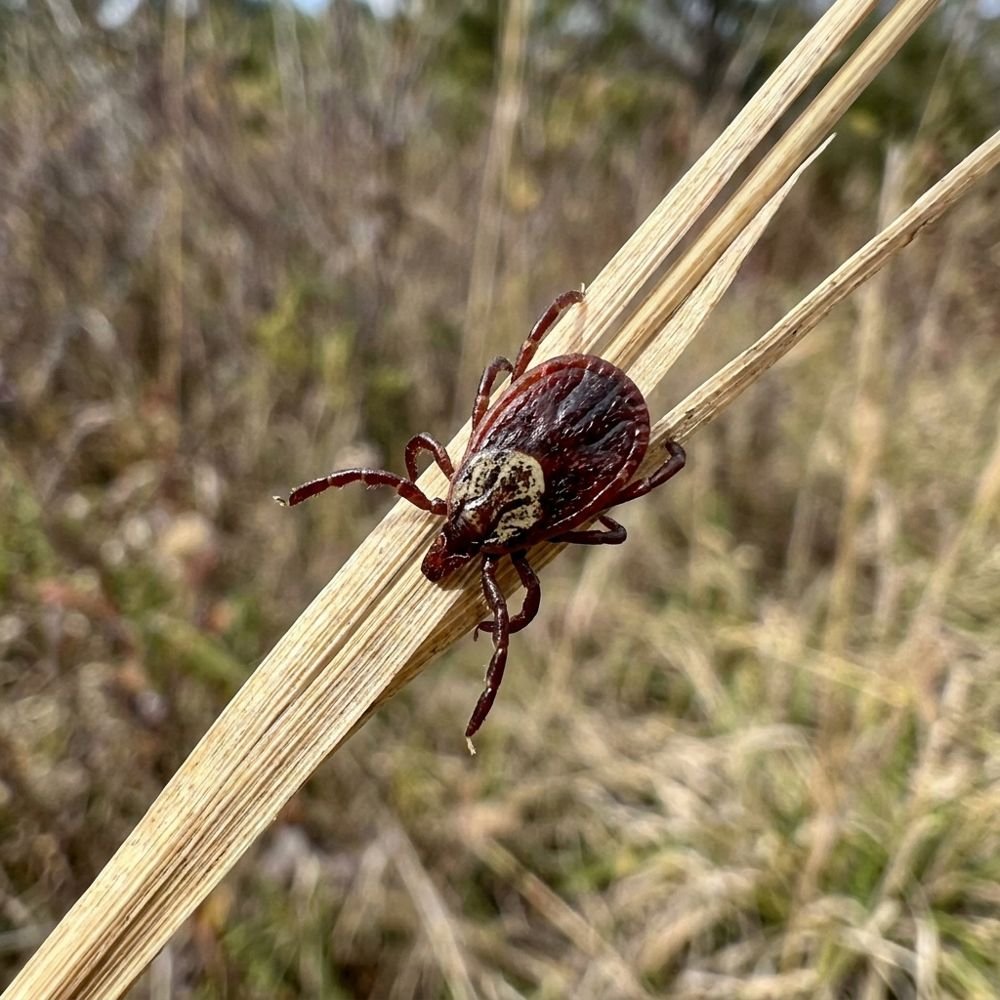
Image: AI-generated illustration
A hard tick with white markings on a brown body, common in tall grass and brushy edges. It can spread Rocky Mountain spotted fever and tularemia, but not Lyme disease. Check people and pets after time outdoors and remove ticks promptly.
What it is
The American dog tick, scientifically known as Dermacentor variabilis, is a hard-bodied tick in the family Ixodidae. It is often called the wood tick, and it is one of the most frequently encountered ticks in North America, especially east of the Rocky Mountains. Unlike soft ticks, which have a leathery, flexible covering, hard ticks have a rigid, shield-like plate on their backs called the scutum. That structure shapes how they feed: a hard tick cannot simply swell in every direction, so it feeds slowly over several days and balloons as it takes in blood.
The American dog tick is a "three-host" tick. Its life has four stages (egg, larva, nymph and adult), and to move from one stage to the next it needs a blood meal from a different animal. Depending on temperature, humidity and the availability of hosts, the whole cycle can take anywhere from several months to more than two years.
The cycle starts when a fully fed female lays her eggs in spring or summer. The six-legged larvae that hatch are tiny, about the size of a poppy seed, and they feed mostly on small rodents such as mice and voles. After feeding they drop off and molt into eight-legged nymphs, roughly the size of a sesame seed, which also favor small mammals. The nymphs then molt into adult males and females. Adults prefer medium-to-large mammals, and dogs are the namesake and most common domestic host, along with raccoons, opossums and deer. People are an accidental host.
The American dog tick is a known carrier of several diseases, most notably Rocky Mountain spotted fever (RMSF), caused by the bacterium Rickettsia rickettsii. It can also spread tularemia, sometimes called rabbit fever. It is not the tick that spreads Lyme disease. That is the blacklegged tick, also called the deer tick, which is covered on its own page.
How to recognize it
Adult American dog ticks are relatively large and sturdy compared with other common ticks. An unfed adult is roughly 5 millimeters (about a quarter inch) long, with short, stubby mouthparts. They look "ornate": a dark brown base color with white, gray or creamy-silver markings on the back.
Females
The female has a prominent whitish shield just behind her head. It covers only the front third to half of her body, leaving the rear dark brown and very elastic so it can expand during feeding. When she is fully fed, a female can grow to the size of a small grape or lima bean and turn a dull gray-blue.
Males
The male is slightly smaller. His shield covers his entire back, so he cannot swell the way a female does. The white markings on a male look like intricate wavy lines or a mottled pattern across the whole back.
Larvae and nymphs
The young stages are very hard to identify by eye. They lack the ornate markings of adults, are generally a uniform brown or reddish color, and are tiny. If you find a small, unmarked tick, have it identified by an expert. The nymph of the blacklegged tick is the main carrier of Lyme disease, so it matters which one you have.
Look-alikes
- Blacklegged (deer) tick: much smaller, without the white ornate markings, and with long, slender mouthparts.
- Lone star tick: the female has a single white dot (the "star") in the center of her back and much longer mouthparts than a dog tick.
- Brown dog tick: plain reddish-brown with no markings. It is more of a concern for dogs kept in kennels or homes.
Where you will find it
The American dog tick thrives where there is enough humidity, shelter and access to hosts. You will most often meet it in edge habitat, the transition zones where open fields or lawns meet woods or dense brush. That includes:
- Tall, overgrown grass and weeds
- Brushy areas, trailsides and field edges
- Overgrown lots, roadsides and utility rights-of-way
- Wooded areas with deciduous trees, especially where there is leaf litter and shrubs
How it finds a host
Unlike some ticks that hunt, the American dog tick is an ambusher. It climbs a blade of grass or low branch and waits, a behavior called questing, holding its front legs outstretched. When an animal brushes past, the tick senses the carbon dioxide it exhales, plus body heat and vibration, and grabs on. It does not jump, fly or drop from trees.
When it is active
Adults are most active in the warmer months, usually from April through August, with the peak in late spring and early summer. Depending on the region and the weather, adults can stay active into September or October. CDC notes that tick exposure can occur year-round, so do not assume a cold snap makes you safe.
Ticks are rarely found in closely mowed, well-kept lawns unless the lawn borders high-risk habitat and wildlife such as deer or raccoons cross it.
Why it matters
The main concern is disease: Rocky Mountain spotted fever and tularemia.
Rocky Mountain spotted fever (RMSF)
RMSF is a serious, sometimes life-threatening illness. According to CDC, cases occur throughout the United States, and the American dog tick is one of the ticks that spreads it. The Mid-Atlantic region sees cases, although the disease is reported most often in parts of the South.
How quickly a tick can pass on the bacterium has been debated. For decades the textbook figure was about 24 to 48 hours of attachment. A CDC-led laboratory study published in 2019 suggested that the bacteria can be transmitted in less than four hours, although the study used guinea pigs, and how well that applies to people is hard to know. The practical lesson is the same: do daily tick checks after being outdoors, and remove ticks promptly. Do not count on having a full day of leeway.
Early symptoms are not specific. They include fever, headache, nausea or vomiting, stomach pain, muscle pain and loss of appetite. A rash usually appears two to four days after the fever begins, often as small flat pink spots on the wrists, forearms and ankles that then spread. The rash can be missing in some patients. If RMSF is left untreated it can damage blood vessels and lead to organ failure or death. It is treated with the antibiotic doxycycline, and CDC says early treatment can prevent severe illness and death. Doctors are advised to start treatment when RMSF is suspected, without waiting for test results, because results can take a long time. There is no vaccine.
Tularemia
Tularemia (rabbit fever) is a bacterial infection that can spread through a tick bite or by handling infected animals such as rabbits and rodents. Symptoms include fever, chills, headache, muscle aches and sometimes a skin ulcer where the tick bit.
Tick paralysis
In rare cases, a feeding female American dog tick can cause tick paralysis. A toxin in her saliva can cause weakness that climbs up the body in people and animals. It usually clears quickly once the tick is removed, which is another reason to check carefully, especially behind the ears and along the hairline of children.
Impact on pets and families
Heavy tick burdens on a dog can lead to anemia, skin irritation, infections from scratching, and illnesses that affect dogs. Beyond health, the constant worry about finding ticks on children and pets after time outdoors takes the fun out of a yard or a local park.
What to do
Managing the risk is mostly about personal protection, pet care and knowing where ticks live.
After time outdoors
- Do a full body check. Look at the scalp and hairline, ears, underarms, behind the knees, between the legs, around the waist and in the belly button. Check children and pets too.
- Tumble clothing in the dryer. CDC advises drying clothes on high heat for about 10 minutes after coming indoors to kill ticks that may be riding along. Wash first, in hot water if you can, if the clothes are dirty.
- Shower soon after coming in. It helps wash off unattached ticks and makes a check easier.
If you find an attached tick
CDC's guidance is to remove it as soon as possible, and not to wait for a medical appointment first:
- Use clean, fine-tipped tweezers to grip the tick as close to the skin as possible.
- Pull straight out with steady, even pressure. Do not twist or jerk, which can break off the mouthparts.
- Clean the bite area and your hands with soap and water, rubbing alcohol or hand sanitizer.
- Dispose of a live tick by sealing it in a container, wrapping it tightly in tape, flushing it down the toilet or putting it in alcohol. Do not crush it with your fingers.
- Note the date and where you likely picked it up.
Do not use petroleum jelly, nail polish, a hot match or other "tricks" to make the tick back out. CDC warns that these can cause the tick to push infected fluid into the skin. CDC also generally does not recommend testing the removed tick, because a test result should not decide your treatment.
If you develop a fever, a rash, or flu-like illness in the days or weeks after a bite, see a doctor and tell them about the tick bite.
Repellents
Use an EPA-registered insect repellent on exposed skin and follow the label. CDC lists active ingredients such as DEET, picaridin, IR3535, oil of lemon eucalyptus, para-menthane-diol and 2-undecanone. Light-colored clothing makes ticks easier to spot, and tucking pants into socks makes it harder for ticks to reach skin.
Pets
Ask your veterinarian about a year-round tick preventive that suits your pet, and check your pets daily, especially after walks through grass or woods. These products typically work before the tick can pass on disease. Your vet is the right person to choose a product and the right dose.
Treating the yard
Do not try to manage ticks in the yard yourself with store-bought pesticides. Product choice, timing and safe use around children and pets matter, and a licensed professional can target the edges where ticks actually live.
When to call a professional
Call a doctor
- If you or a family member develops a fever, a rash or illness after a tick bite, especially in the following two weeks. Rocky Mountain spotted fever is serious and early treatment matters.
- If a tick's mouthparts remain in the skin and the area becomes red, swollen or painful.
- If you notice weakness, numbness or trouble walking after a tick bite. Call right away.
Call a veterinarian
- If your pet keeps getting ticks despite a preventive, so the product and how it is used can be checked.
- If your dog is lethargic, has a fever, stops eating or has pale gums after tick exposure.
Call a pest control professional
- If your property is wooded or borders brush and wildlife, and you regularly find ticks around the yard. A licensed professional can inspect the transition zones where lawn meets woods and recommend a plan.
- If you find ticks indoors in numbers. American dog ticks do not normally infest homes, but the brown dog tick can, and a professional can identify which tick you have and what to do about it.
Sources
- CDC: About Rocky Mountain Spotted Fever
- CDC: Tick Removal Fact Sheet (PDF)
- CDC: After a Tick Bite
- Entomology Today: Don't Get Too Attached, New Research on the Grace Period for Tick-Borne Spotted Fevers
- CDC: Preventing Mosquito Bites (repellent guidance)
Questions
How long does a tick have to be attached to spread Rocky Mountain spotted fever?
Older estimates said 24 to 48 hours, but a 2019 CDC-led laboratory study suggested the bacteria can pass in under four hours. Because timing is uncertain, check for ticks daily and remove any you find promptly.
Do American dog ticks spread Lyme disease?
No. Lyme disease is spread by the blacklegged (deer) tick. American dog ticks can spread Rocky Mountain spotted fever and tularemia.
Should I save the tick after removing it?
Keep it sealed in a container or alcohol until you know whether you will need a doctor, and take a photo if you can. CDC generally does not recommend testing ticks to decide treatment, but identifying the tick can help your doctor.
Can ticks live in my house?
American dog ticks do not normally infest homes. They ride in on pets or clothing. If you find several ticks indoors, a professional can identify the species.
Related pests
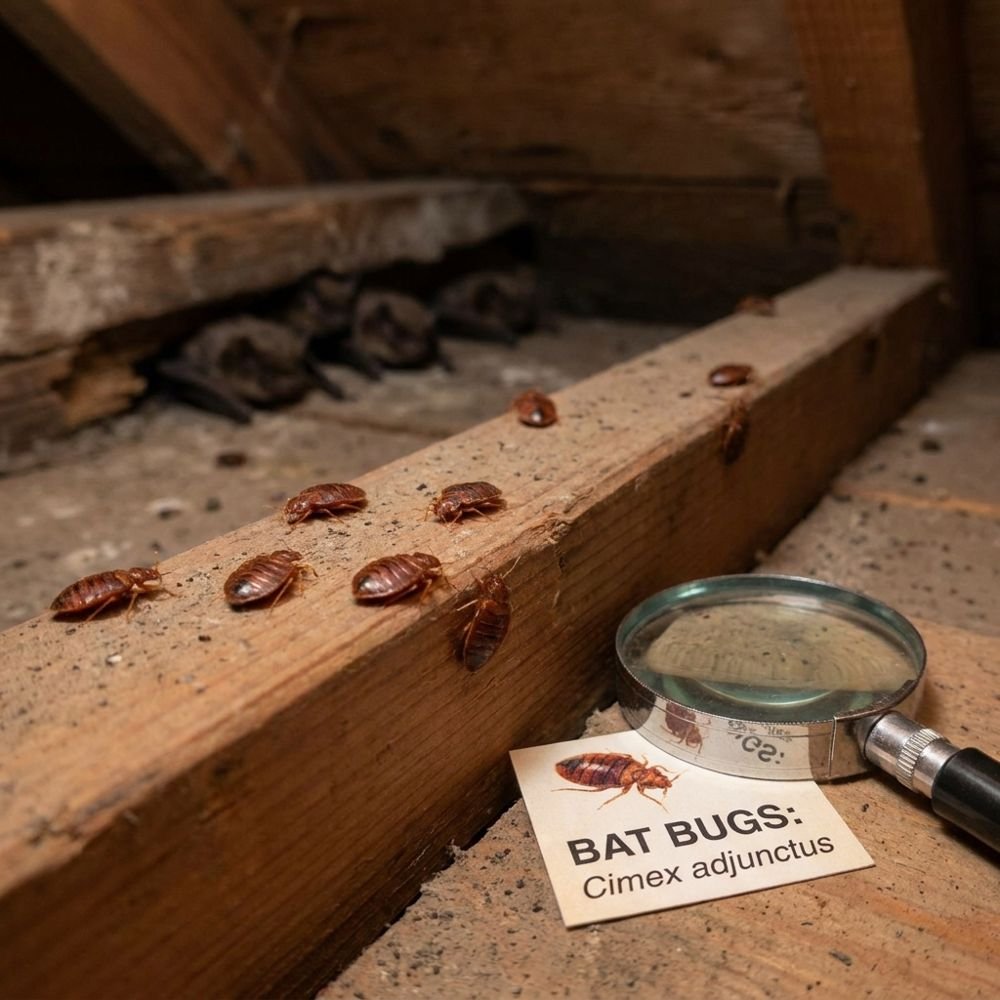
Bat Bugs
Blood-feeding insects closely related to bed bugs that primarily parasitize bats. They can wander into occupied rooms when bats leave a structure and may occasionally bite people.
Read more →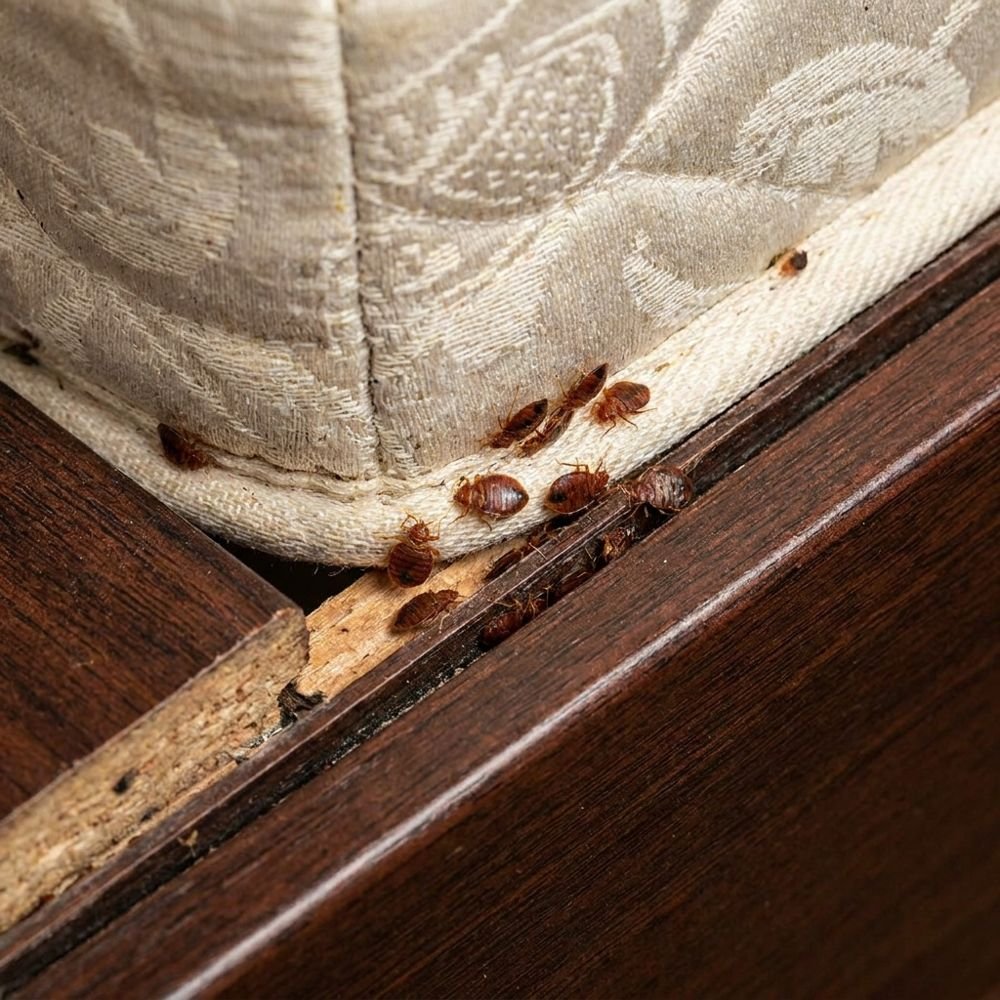
Bed Bugs
Small, flat, reddish-brown insects that feed on human blood at night and hide in mattress seams, bed frames and furniture. They do not spread disease, but they are hard to eliminate and spread easily. Early...
Read more →Deer Tick
A small hard tick, also called the blacklegged tick, that spreads Lyme disease and other infections. Nymphs are tiny and easy to miss. Check daily, remove ticks promptly, and see a doctor if symptoms follow a bite.
Read more →Fleas
Tiny jumping insects that bite pets and people. Most of the population lives as eggs, larvae and pupae in carpet and bedding, so you need your vet for the pet, steady cleaning and sometimes a professional.
Read more →This page is general information, not a diagnosis. Pests vary by region and situation, and an on-site inspection is the reliable way to know what you have.