Deer Tick
DangerousA small hard tick, also called the blacklegged tick, that spreads Lyme disease and other infections. Nymphs are tiny and easy to miss. Check daily, remove ticks promptly, and see a doctor if symptoms follow a bite.
What it is
The blacklegged tick (Ixodes scapularis), commonly called the deer tick, is the tick that spreads Lyme disease in the eastern United States. It is a small hard tick, and in the Mid-Atlantic it is the tick most closely tied to the region's serious tick-borne illnesses. CDC identifies it as the vector for Lyme disease, along with several other infections.
Life cycle
Like other hard ticks, the blacklegged tick has three active stages after the egg: larva, nymph and adult. Each stage needs a blood meal from a host before it can molt into the next stage, and the whole life cycle typically takes about two years.
- Larvae hatch in summer. They are about the size of a period and feed mostly on small animals like mice, birds and chipmunks. Larvae are not born carrying the Lyme bacterium; they pick it up from infected hosts during this first meal.
- Nymphs are active in spring and summer. They are about the size of a poppy seed and are the main source of human Lyme infections, because they are tiny, hard to see, and active when people spend time outdoors.
- Adults are active in the fall, continuing into winter and early spring on mild days. They prefer larger animals, especially white-tailed deer, and can also bite people and pets.
Why "deer tick" is only part of the story
Deer are important for adult ticks, which mate on them, but the bacteria that cause Lyme disease are maintained mostly in small mammals and birds. Removing deer alone does not eliminate the disease risk.
How to recognize it
Size and look
Blacklegged ticks are smaller than American dog ticks.
- Larvae: about 1 millimeter, six legs.
- Nymphs: about 1 to 2 millimeters, eight legs, light brown to translucent; easily overlooked.
- Adult females: about 3 millimeters, with a reddish-orange body behind a dark brown to black shield. She swells to a gray-brown color as she feeds.
- Adult males: smaller and almost entirely dark.
Unlike the American dog tick, the blacklegged tick has no white ornate markings, and its mouthparts are relatively long.
Where on the body
Ticks seek warm, moist, hidden places: scalp and hairline, behind ears, underarms, waistband, groin, behind the knees and between the toes. A nymph can be as small as a freckle, so look carefully for a new "dot" that doesn't wash off.
Look-alikes
- American dog tick: larger, with white or silvery markings. See the American dog tick page.
- Lone star tick: a female has a single white spot on her back.
- Brown dog tick: uniformly reddish-brown.
- Other things: freckles, scabs, moles, dirt specks and tiny beetles can resemble nymphs.
If you're not sure what you've found, photograph it and keep it in a sealed container or in alcohol until you decide whether you need to talk to a doctor.
Where you will find it
Habitat
Blacklegged ticks thrive in humid, shaded places with leaf litter. They are common in:
- Woodlands and the edges between woods and lawn
- Leaf litter, brush and tall grass
- Stone walls and wooded trails
- Shaded yards that border natural areas
They need humidity, and dry, sunny, well-mown lawns are less hospitable.
Questing
Ticks "quest" by climbing vegetation and holding out their front legs. They cannot jump or fly. When a host brushes past, they climb aboard and move to a protected spot before attaching.
Geography and season
Blacklegged ticks are established across the Northeast and Mid-Atlantic and parts of the Upper Midwest, and are in the Southeast. Nymphs peak in late spring and summer. Adults are active in the fall and can be active on mild winter days when it's above freezing. CDC encourages thinking of tick season as year-round, because mild weather can bring ticks out at any time.
Why it matters
Lyme disease
Lyme disease is caused by the bacterium Borrelia burgdorferi (and in some places Borrelia mayonii) and is the most commonly reported tick-borne disease in the United States, according to CDC. Typical early signs include:
- A rash called erythema migrans, which often expands over days, sometimes with a clear center like a bull's-eye. It does not appear in every case.
- Fever, chills, fatigue, body aches, headache, swollen lymph nodes.
If untreated, Lyme disease can spread to the joints, heart and nervous system. Symptoms may include severe joint pain and swelling (especially the knees), facial drooping (Bell's palsy), heart rhythm changes, nerve pain and memory problems. CDC notes that most cases are treated successfully with a course of antibiotics, and early treatment gives the best outcome.
Other infections
The blacklegged tick can also spread other pathogens, including those that cause anaplasmosis, babesiosis, Powassan virus disease and, in some areas, other illnesses. Symptoms overlap with Lyme and with flu, so tell your doctor about any tick exposure.
Transmission timing
Generally, a blacklegged tick has to stay attached for a day or more before it can pass on the Lyme bacterium, and the sooner it is removed the lower the risk. This is a reason to check daily and remove ticks quickly. However, other pathogens, such as Powassan virus, may be transmitted faster, so prompt removal is always best.
Pets
Dogs can get Lyme disease and other tick-borne illness, and they bring ticks into the home. Talk to your veterinarian about prevention.
What to do
Prevent bites
- Know the habitat. Wear long pants and closed shoes in wooded, brushy and grassy areas, and walk in the center of trails.
- Use repellent. Apply an EPA-registered repellent to exposed skin, following the label. CDC lists DEET, picaridin, IR3535, oil of lemon eucalyptus, para-menthane-diol and 2-undecanone among the active ingredients.
- Wear light colors so ticks are easier to spot. Tuck pant legs into socks.
After being outdoors
- Check your whole body within a couple of hours, including scalp, ears, underarms, waist, groin, behind the knees and between the toes. A mirror or a helper makes it easier.
- Check children and pets, and the gear you carried.
- Put clothes in the dryer on high heat for about 10 minutes to kill ticks. If clothes are damp or need washing, they may need longer in the dryer; hot-water washing alone may not kill all ticks.
- Shower soon after coming in.
Removing an attached tick
Follow CDC's steps:
- Use fine-tipped tweezers to grasp the tick as close to the skin as possible.
- Pull upward with steady, even pressure. Don't twist or jerk.
- Clean the bite and your hands with soap and water or rubbing alcohol.
- Dispose of the tick by placing it in alcohol, sealing it in a bag or tape, or flushing it down the toilet. Never crush it with bare fingers.
Avoid folk remedies like petroleum jelly, nail polish or heat, which can make the tick release more fluid into the skin.
Watch afterward
Note the date and where the bite happened. Over the next few weeks, watch for a rash, fever, aches or fatigue. Contact a doctor right away if these appear, and mention the tick bite.
Yard and pets
- Keep lawns mown and leaf litter raked back from play areas and living spaces.
- Place play equipment away from woodland edges.
- Ask your veterinarian about tick prevention products for pets.
- For persistent tick pressure around your property, a licensed professional can assess the edges and suggest a plan. Avoid using pesticides yourself.
When to call a professional
Call a doctor
- After a bite if you develop a rash (especially one that expands), fever, chills, severe headache, muscle or joint pain, or fatigue, in the days or weeks that follow.
- If you develop facial drooping, severe neck stiffness, heart palpitations, dizziness, or numbness. Seek care promptly.
- If you have questions about whether treatment is needed after a bite. Your doctor can advise based on how long the tick was attached, where you live and your health.
Call a veterinarian
- For tick prevention for dogs and cats, and if your pet becomes lethargic, limps, loses appetite or has a fever after tick exposure.
Call a pest professional
- When you regularly find ticks in your yard, particularly if your home backs onto woods or you have a lot of wildlife activity.
- To assess landscape edges and plan a property-specific approach.
Sources
- CDC: About Lyme Disease
- CDC: After a Tick Bite
- CDC: Tick Removal Fact Sheet (PDF)
- CDC: Preventing Mosquito Bites (repellent guidance)
Questions
Are deer ticks the same as dog ticks?
No. Blacklegged (deer) ticks are smaller, without white markings, and spread Lyme disease. American dog ticks are larger and marked, and spread Rocky Mountain spotted fever.
How long must a tick be attached to spread Lyme disease?
Generally a day or more, but timing varies and other germs can pass faster. Remove ticks as soon as you find them.
Should I get the tick tested?
CDC generally does not recommend testing removed ticks to decide treatment. Watch for symptoms and talk to your doctor.
Are ticks active in winter?
Adult blacklegged ticks can be active on mild winter days. Think of tick season as year-round.
Related pests
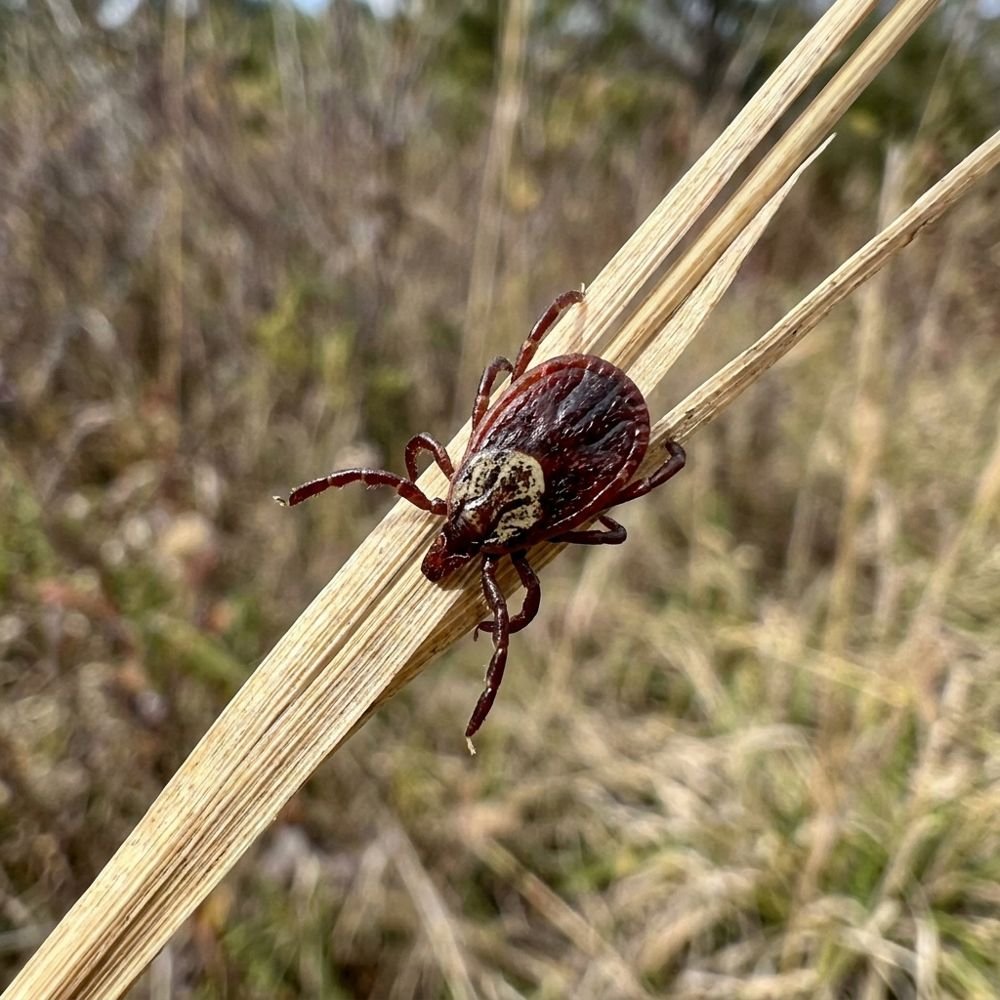
American Dog Tick
A hard tick with white markings on a brown body, common in tall grass and brushy edges. It can spread Rocky Mountain spotted fever and tularemia, but not Lyme disease. Check people and pets after time outdoors and...
Read more →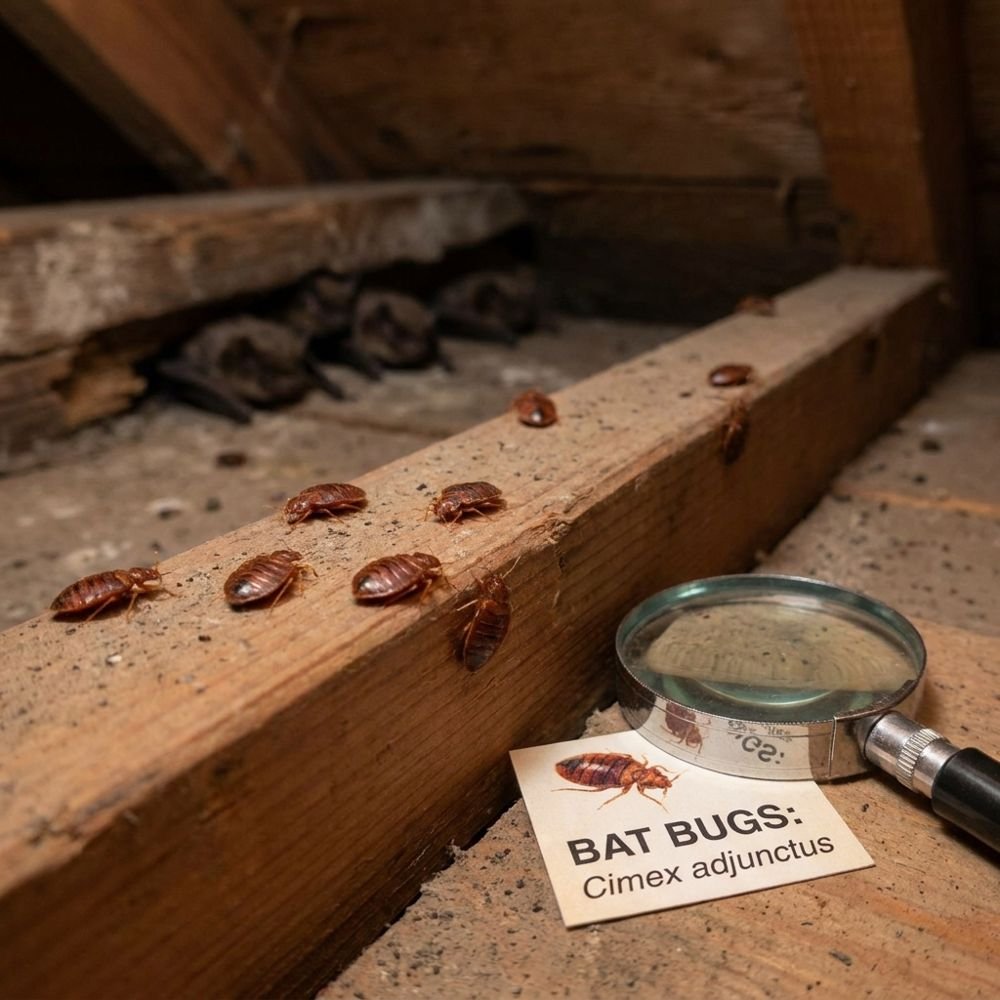
Bat Bugs
Blood-feeding insects closely related to bed bugs that primarily parasitize bats. They can wander into occupied rooms when bats leave a structure and may occasionally bite people.
Read more →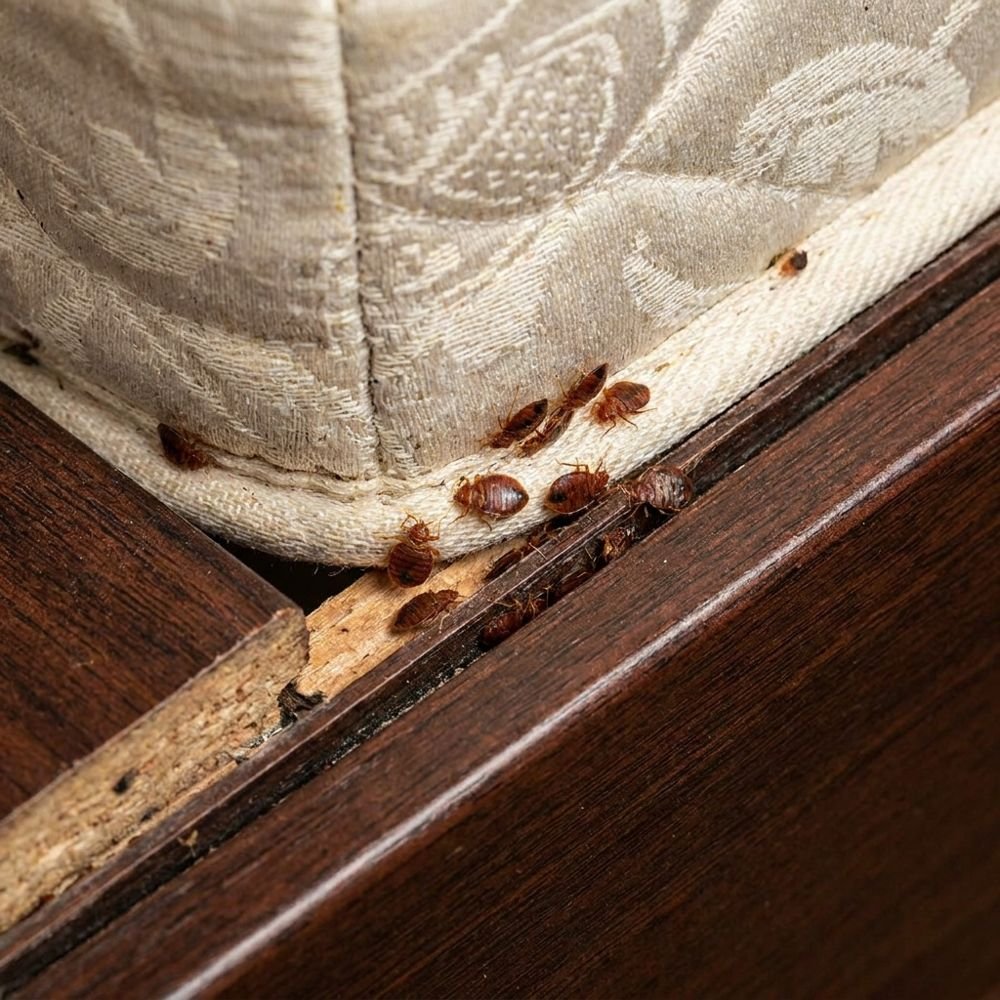
Bed Bugs
Small, flat, reddish-brown insects that feed on human blood at night and hide in mattress seams, bed frames and furniture. They do not spread disease, but they are hard to eliminate and spread easily. Early...
Read more →Fleas
Tiny jumping insects that bite pets and people. Most of the population lives as eggs, larvae and pupae in carpet and bedding, so you need your vet for the pet, steady cleaning and sometimes a professional.
Read more →This page is general information, not a diagnosis. Pests vary by region and situation, and an on-site inspection is the reliable way to know what you have.