Indian Meal Moths
Nuisance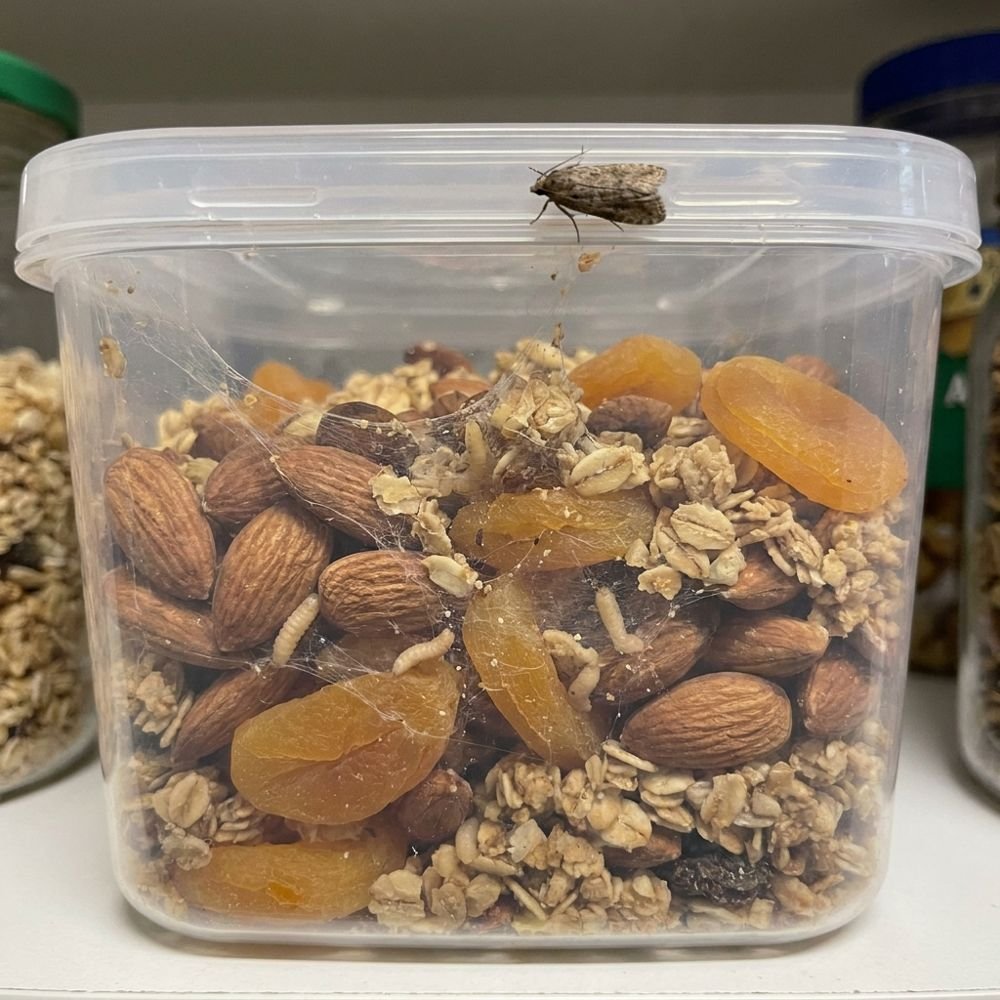
Image: AI-generated illustration
What it is
One of the most common stored-product moths. Larvae infest grains, cereals, nuts, pet food, dried fruit, seeds, and many packaged foods and often leave silken webbing.
How to recognize it
Small moths with two-toned wings (gray front, coppery back), silky webbing, and larvae crawling up walls and ceilings.
Where you will find it
Pantries, pet food, birdseed, dried fruit, nuts, and grains.
Why it matters
They are one of the most common pantry pests. Larvae wander far from the source, which makes it hard to find.
What to do
- Check dry goods such as flour, cereal, rice, nuts, pet food, and spices, and throw out anything infested.
- Move remaining food into airtight containers and vacuum shelves and crevices where crumbs collect.
- Look for the original source, such as an old open package at the back of the pantry.
- Contact a licensed pest professional if the problem returns or you cannot find the source.
When to call a professional
- They keep returning after you clean and discard infested food.
- You find larvae or webbing in several areas.
- You store or sell food commercially.
Related pests
Almond Moths
A stored-product moth (often called the tropical warehouse moth) whose larvae infest nuts, grains, dried fruit, seeds, chocolate, and other stored foods. Larvae produce webbing in infested products.
Read more →Cigarette Beetles
Small reddish-brown stored-product beetles whose larvae feed on tobacco, spices, pet food, dried plant material, grains, and many packaged foods. Adults are strong fliers and may be seen near windows or lights.
Read more →Drugstore Beetles
Small brown stored-product beetles whose larvae feed on a very wide range of dried foods, spices, pharmaceuticals, pet foods, books, and plant materials. They can chew through thin packaging.
Read more →Flour Beetles
Stored-product beetles that infest flour, cereal, meal, spices, and other processed grain products. They generally feed on broken or milled material rather than intact kernels.
Read more →This page is general information, not a diagnosis. Pests vary by region and situation, and an on-site inspection is the reliable way to know what you have.